Besides its embassies in other countries, Japan keeps permanent missions at the major international organizations: the United Nations in New York, the UN agencies in Geneva, Vienna, Rome and Nairobi, the European Union, NATO, the OECD, UNESCO, the International Civil Aviation Organization, ASEAN and the African Union. This overview explains what these missions do, where they are and what Japan pursues at each organization.
What a Permanent Mission Does
An embassy represents Japan in another country. A permanent mission represents Japan at an international organization. It is headed by a permanent representative with the rank of ambassador, and its staff come not only from the Ministry of Foreign Affairs but also from ministries whose work the organization touches, such as finance, economy and trade, health or defense.
Missions do not provide consular services. Passports, visas, certificates and help for Japanese travelers are handled by embassies and consulates, even in cities such as Geneva or Paris where both kinds of office exist side by side.
The main tasks of a mission are to:
- negotiate resolutions, treaties and the organization’s budget with other member states;
- speak and vote for Japan in councils, committees and assemblies;
- report developments to the government in Tokyo and receive instructions;
- propose Japanese candidates for elected posts and senior staff positions;
- follow how Japan’s voluntary contributions to programs are spent.
Japan at the United Nations
Japan became the 80th member of the United Nations on 18 December 1956, four years after the San Francisco Peace Treaty restored its sovereignty. UN membership was a central goal of postwar diplomacy and remains a pillar of Japan’s foreign policy.
Japan has been elected a non-permanent member of the Security Council 12 times, more than any other UN member, most recently for 2023–2024. It is the third-largest contributor to the UN regular budget after the United States and China. Together with Germany, India and Brazil, the so-called G4, Japan campaigns for reform of the Security Council and a permanent seat of its own.
Japanese nationals have led major UN bodies. Sadako Ogata served as UN High Commissioner for Refugees from 1991 to 2000, through the crises in northern Iraq, the Balkans and the Great Lakes region of Africa. Yukiya Amano was Director General of the International Atomic Energy Agency from 2009 until his death in 2019.
Japan’s Permanent Missions and Their Addresses
Permanent Mission of Japan to the United Nations
605 Third Avenue, 28th Floor, New York, NY 10158, USA
Tel. (1-212) 223-4300
The largest of Japan's missions follows the General Assembly, the Security Council and the Economic and Social Council, and the funds and programs based in New York such as UNICEF and UNDP. Its staff negotiate in the General Assembly's six main committees, including the Fifth Committee, which sets the UN budget and the assessment scale that determines each country's share.
International Organizations in Geneva
↑ TopPermanent Mission of Japan to the International Organizations in Geneva
3 Chemin des Fins, 1218 Grand-Saconnex, Geneva, Switzerland
Mail Case Postale 337, 1211 Genève 19, Switzerland
Tel. (41-22) 717-3111
Geneva hosts more international organizations than any other city, and the mission covers many of them: the Human Rights Council, the World Health Organization, the International Labour Organization, the UN High Commissioner for Refugees, the International Telecommunication Union, the World Intellectual Property Organization and the World Trade Organization. The work ranges from trade disputes and patent rules to pandemic preparedness and refugee funding.
Delegation of Japan to the Conference on Disarmament
3 Chemin des Fins, 1218 Le Grand-Saconnex, Geneva, Switzerland (same building as the Geneva mission)
Mail Case Postale 44, 1218 Le Grand-Saconnex, Switzerland
Tel. (41-22) 717-3444
The Conference on Disarmament is the world's single standing forum for negotiating multilateral disarmament treaties. As the only country to have suffered atomic bombings, Japan uses it to press for nuclear disarmament, the entry into force of the Comprehensive Nuclear-Test-Ban Treaty and a treaty banning the production of fissile material for weapons.
International Organizations in Vienna
↑ TopPermanent Mission of Japan to the International Organizations in Vienna
Andromeda Tower, Donau-City-Strasse 6, 1220 Vienna, Austria
Tel. (43-1) 260630
The Vienna mission deals with the International Atomic Energy Agency, the Preparatory Commission for the Comprehensive Nuclear-Test-Ban Treaty Organization, the UN Office on Drugs and Crime and the UN Industrial Development Organization. Nuclear safety has been a major topic since the 2011 Fukushima Daiichi accident, including IAEA reviews of the discharge of treated water into the sea.
International Organizations in Rome
↑ TopPermanent Mission of Japan to the International Organizations in Rome
Via Quintino Sella 60, 00187 Rome, Italy
Tel. (39) 06-487-991
Rome is the home of the three UN food agencies: the Food and Agriculture Organization (FAO), the World Food Programme (WFP) and the International Fund for Agricultural Development (IFAD). Japan is one of the largest donors to emergency food aid delivered by the WFP.
International Organizations in Nairobi
↑ TopPermanent Mission of Japan to the International Organizations in Nairobi
Mara Road, Upper Hill, Nairobi, Kenya
Mail P.O. Box 60202, Nairobi
Tel. (254-20) 2898-000
Nairobi is the only UN headquarters in the Global South. The mission, which shares its address with the Embassy of Japan in Kenya, works with the UN Environment Programme (UNEP) and UN-Habitat, the agency for cities and housing.
Mission of Japan to the European Union
Rue Van Maerlant 1, 1040 Brussels, Belgium
Tel. (32-2) 500-7711
The mission manages Japan's relations with the EU institutions. Its main files are the EU–Japan Economic Partnership Agreement, in force since 1 February 2019 and one of the largest free trade areas in the world, the Strategic Partnership Agreement on political cooperation, and the Security and Defence Partnership agreed in 2024.
Mission of Japan to the North Atlantic Treaty Organization
Rue Van Maerlant 1, 1040 Brussels, Belgium
Tel. (32-2) 513-2340
Japan is one of NATO's partners in the Indo-Pacific. The mission follows the alliance's work on cyber defense, maritime security and the war in Ukraine, and prepares Japan's participation in NATO summits, which Japanese prime ministers have attended since 2022.
Delegation of Japan to the OECD
112 Avenue Kléber, 75116 Paris, France
Tel. (33-1) 5376-6100
Japan joined the Organisation for Economic Co-operation and Development on 28 April 1964, the first member from outside Europe and North America. The delegation, which moved to its present address in June 2021, takes part in the OECD's economic surveys, its work on international tax rules, the PISA education assessments and the statistics on development aid.
Permanent Delegation of Japan to UNESCO
100 Avenue de Suffren, 75015 Paris, France
Tel. (33-1) 5359-2700
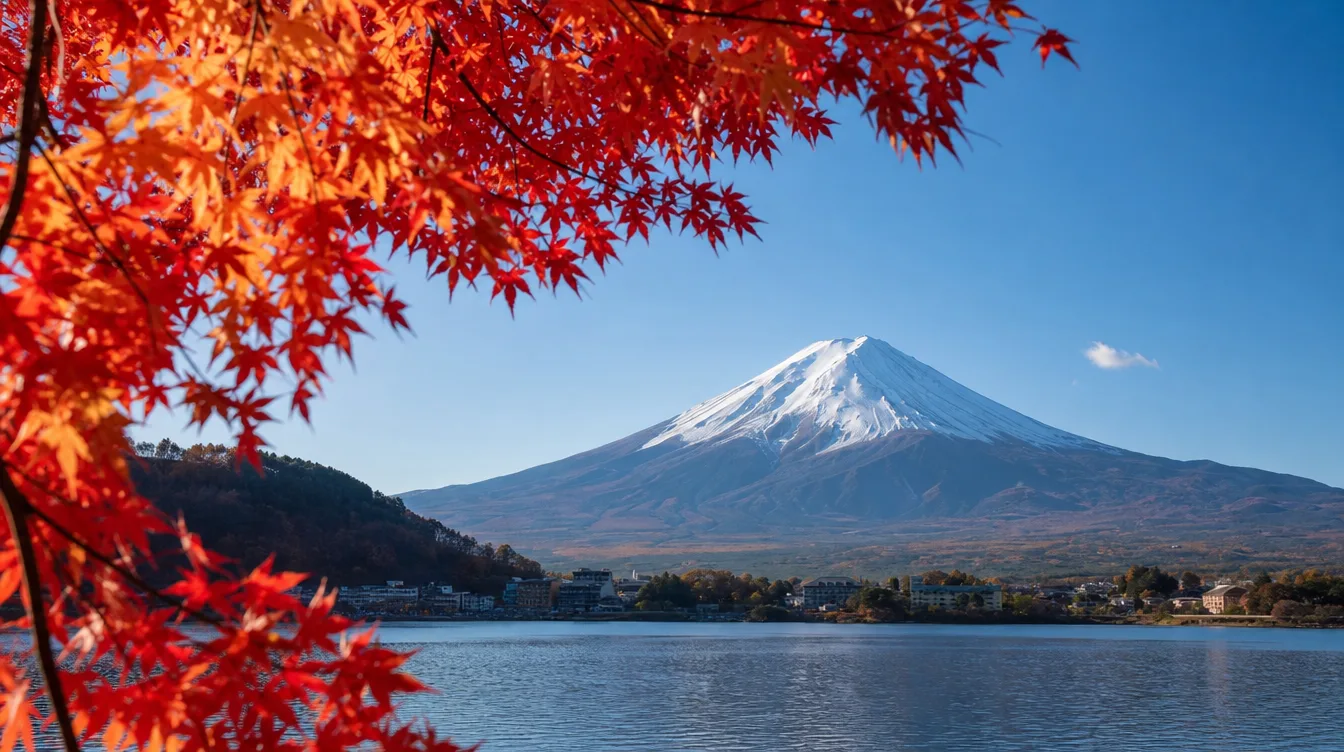
Japan joined UNESCO in 1951, five years before it was admitted to the United Nations. The delegation handles nominations for the World Heritage List, on which Japan has more than 25 sites, among them Horyu-ji, Himeji Castle, the Hiroshima Peace Memorial and Mount Fuji. Washoku, traditional Japanese cuisine, is inscribed on the list of intangible cultural heritage.
Delegation of Japan to the International Civil Aviation Organization
999 Robert-Bourassa Boulevard, Suite 10.35, Montreal, Quebec H3C 5J9, Canada
Tel. (1-514) 954-8280
ICAO sets the global standards for aviation safety, security, air navigation and aircraft emissions that national aviation authorities then apply. Japan, home to two major airlines and busy hubs such as Haneda and Narita, takes part in drafting these rules.
Mission of Japan to ASEAN
Jalan M.H. Thamrin 24, Jakarta Pusat 10350, Indonesia
Tel. (62-21) 3190-4901
Opened in 2011, this was Japan's first mission dedicated to the Association of Southeast Asian Nations. Japan and ASEAN have held a formal dialogue since 1973 and raised their relations to a comprehensive strategic partnership in 2023. Trade, infrastructure financing, disaster response and maritime security are the main topics.
Mission of Japan to the African Union
Bole Sub-city, Woreda 06, House No. 431, Addis Ababa, Ethiopia
Tel. +251-(0)11-667-1155
The mission in the Ethiopian capital works with the African Union Commission. Its work is closely tied to TICAD, the Tokyo International Conference on African Development, which Japan has hosted since 1993; the ninth conference met in Yokohama in August 2025.
Addresses and phone numbers as published by the Ministry of Foreign Affairs of Japan. Opening hours, appointment rules and visa counters differ from office to office; check the official website of the mission before you go.
Contacting a Mission
Each mission has its own website under the domain emb-japan.go.jp, and all of them are listed on the website of the Ministry of Foreign Affairs of Japan, mofa.go.jp. Those sites carry current phone numbers, statements and speeches, and vacancies for local staff.
Missions are working offices, not public service counters. Anyone who needs a visa, a passport renewal, a certificate or help as a Japanese citizen abroad should contact the embassy or consulate responsible for their place of residence.
Frequently Asked Questions
What is the difference between an embassy and a permanent mission?
An embassy handles Japan’s relations with one country and offers consular services. A permanent mission represents Japan at an international organization and offers no consular services.
Can a permanent mission issue a visa?
No. Visas for Japan are issued only by Japanese embassies and consulates.
Where is Japan’s mission to the United Nations?
At 866 United Nations Plaza in Manhattan, New York, close to UN headquarters.
How many times has Japan sat on the Security Council?
Twelve times as a non-permanent member, most recently in 2023–2024, more than any other UN member state.